Integrated Oilfield Services - USA
Schlumberger (NYSE: SLB), Halliburton (NYSE: HAL), Baker Hughes (NASDAQ: BKR), Weatherford International (NASDAQ: WFRD), National Energy Services Reunited (NASDAQ: NESR)

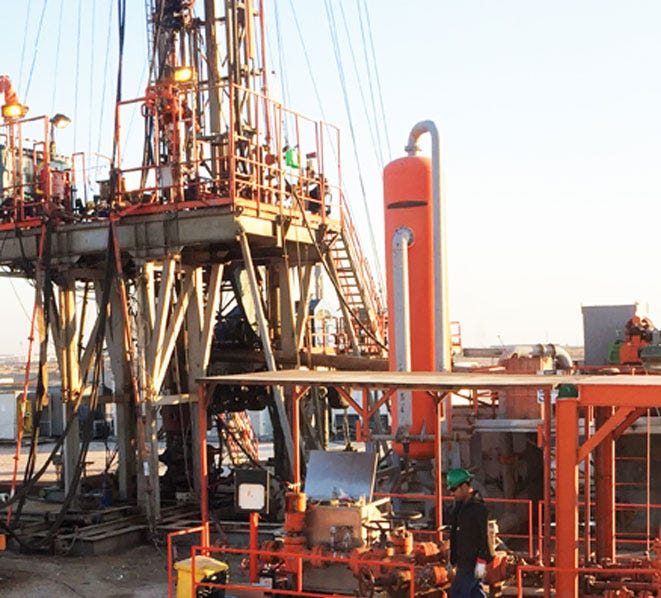
Integrated oilfield services companies provide a broad range of products and services that support oil and gas exploration and production. They design and manufacture drilling equipment, perform services like well drilling and completion, reservoir evaluation, and production optimization. In essence, they offer “one-stop” solutions that enable oil & gas operators to efficiently find and produce hydrocarbons. These firms occupy a critical role in the value chain between exploration & production (E&P) companies and the actual drilling and extraction process. Halliburton, Schlumberger, Baker Hughes, and their peers “compete to invent and sell products and services that are critical to drilling and production operations”. Revenue is generated through service contracts (often day-rates or project fees for drilling, well services, etc.) and product sales or rentals (e.g. drilling tools, completion equipment, subsea hardware). By providing advanced technology and skilled personnel, integrated service companies allow oil producers to outsource highly specialized tasks across the oilfield lifecycle, from drilling new wells to maintaining mature fields.
🏭 Key Companies
Schlumberger (NYSE: SLB) – The world’s largest oilfield services company (recently rebranded as “SLB”). Schlumberger offers a comprehensive portfolio from drilling services and well completions to subsurface software and digital solutions. It has a broad geographic reach and a technology edge in areas like subsurface imaging and well drilling.
Halliburton (NYSE: HAL) – The second-largest integrated OFS firm, historically dominant in North America (especially in drilling and fracking services) and now with significant international business. Halliburton provides drilling, completion, and production services, and is known for its strength in hydraulic fracturing.
Baker Hughes (NASDAQ: BKR) – An integrated oilfield services and equipment company that also has a significant oilfield equipment and industrial energy technology business (e.g. LNG and turbomachinery). Baker Hughes (formerly part of GE) provides services similar to peers, but also manufactures heavy equipment for oilfields and LNG facilities. It brands itself as an “energy technology” company and has diversified into areas like carbon capture and hydrogen.
Weatherford International (NASDAQ: WFRD) – A U.S.-domiciled but globally diversified oilfield services company that underwent a major restructuring (including a 2019 bankruptcy and turnaround). Weatherford offers a wide range of services (drilling tools, well construction, production services, etc.) across North America, Middle East, Latin America, and beyond.
National Energy Services Reunited (NASDAQ: NESR) – A smaller U.S.-incorporated oilfield services company with primary operations in the Middle East and North Africa. NESR was formed via SPAC in 2018 and provides integrated services (drilling, completion, production, etc.) to national oil companies in MENA. While it operates at a smaller scale, NESR leverages local presence in high-growth Middle Eastern markets.
📈 Historical and Forecast Growth Performance

The past five years have been a roller-coaster for the oilfield services industry. A severe downturn in 2020 (due to the pandemic oil-price crash) caused revenues to plunge in 2020, followed by a strong rebound from 2021 onward as oil demand recovered. For the 2019–2024 period, the large U.S. service firms have only modest net growth to show, given that the 2020 drop erased prior gains. Schlumberger’s 2023 revenues, for example, were roughly back to their 2018 levels (after dipping in 2020 and then growing ~20% in 2022–2023). Halliburton likewise saw a sharp decline then recovery, ending just below its 2018 revenue. Baker Hughes and Weatherford had flat-to-slightly positive revenue CAGRs over five years, with recovery in 2022–2023 offsetting earlier declines. The standout in growth was NESR, which (from a smaller base) expanded significantly – its revenue roughly doubled between 2017–2019 and 2023 (aided by acquisitions and MENA expansion). In short, industry-wide historical growth has been low (or even negative) if measured peak-to-peak, with 2024 revenues only slightly above 2019 levels for most majors, but smaller players like NESR managed higher relative growth off a low base.
Looking forward, consensus forecasts project moderate growth for the integrated oilfield services industry, driven by steady upstream capital spending in a sustained oil price environment. Industry revenue is expected to grow around mid-single digits annually (roughly ~3–5% per year) over the next few years. Within that, Schlumberger is anticipated to outpace peers – analyst estimates imply SLB can grow around 8% per annum in the next 3 years, slightly above the broader energy services industry’s ~7–8% pace. Schlumberger’s leading international position and exposure to offshore and Middle East projects underpin this stronger growth outlook. Baker Hughes and Halliburton are forecast as laggards in revenue growth. Both are more heavily weighted to North America and traditional service lines, and their consensus revenue CAGRs are only on the order of ~2% per year, significantly below the industry average. For instance, Halliburton’s revenue is projected to increase just ~2.2% annually in the next 3 years vs ~4–5% for the industry, reflecting a cautious view on North American drilling activity. Baker Hughes similarly shows ~2% annual growth forecast (despite its diversification), perhaps due to its portfolio including lower-growth segments and a focus on margin over volume. Weatherford’s growth expectations are surprisingly muted – after its post-restructuring surge, consensus sees revenues essentially flat (≈0% growth) in the coming years, implying the company may prioritize margin improvement and cash flow over chasing revenue, or that it faces competitive limits on expansion. NESR being a smaller firm in high-growth markets could see above-average growth if Middle Eastern investment stays strong; indeed, its near-term outlook is upbeat (2025 revenue is forecast at ~$1.5B, +15% YoY). Over five years, NESR’s growth rate could remain in high-single or double digits, though with higher uncertainty.
Industry Leaders and Laggards: In summary, Schlumberger is viewed as the growth leader among U.S.-based peers, leveraging international and offshore cycle upswing. NESR might also post high growth (percentage-wise), but from a small base and with higher risk. On the other hand, Halliburton and Baker Hughes are expected to be growth laggards – essentially flat to low-single-digit growth – due to their exposure to potentially slowing segments (e.g. North American shale) and a strategic emphasis on profitability over market share. Weatherford sits in the middle: after a strong rebound it may now grow slower (flat-line) as it consolidates its gains. It’s worth noting that these forecasts depend on macro assumptions (oil prices, OPEC policy, etc.), so actual growth could differ if the cycle strengthens or weakens unexpectedly.
📊 Industry Trends and Growth Drivers
Several key trends and drivers are shaping the integrated oilfield services industry outlook:
Upstream Spending Cycle & Oil Prices: Broadly, the industry’s fortunes rise and fall with upstream capital expenditure. After years of under-investment (2015–2020 downturn and the 2020 crash), global E&P spending has been increasing, which drives demand for oilfield services. High oil and gas prices in 2022–2023 encouraged more drilling programs, especially internationally. Oil prices in 2024–2025 have remained relatively robust, prompting national oil companies and majors to invest in capacity (e.g. Middle East production expansions, offshore projects). This macro backdrop provides a tailwind for service companies. However, volatility remains – economic uncertainty, potential U.S. recession, and OPEC+ production cuts are risk factors that could soften demand for services. Overall, the current cycle is expansionary, but service firms are watchful of macro risks that could disrupt growth.
Data Center & AI-Driven Energy Demand: A newer driver for the oil & gas industry is the surging power demand from data centers and high-performance computing (AI). These energy-intensive facilities are proliferating, and they require massive electricity – which in many regions means increased natural gas consumption for power generation. It’s estimated that U.S. electricity demand will grow 55% over the next 20 years, far outpacing the past rate, largely due to growth in data centers; by 2030, data centers could consume around 9% of all U.S. power generation. This trend indirectly benefits oilfield service providers: stronger electricity demand supports natural gas development (for gas-fired power) and even on-site power solutions. For example, Baker Hughes recently secured an order to provide gas turbine technology to power U.S. data centers, as part of a project to meet rising data center energy needs. More broadly, Schlumberger has noted increasing demand for services driven by such non-traditional factors (data centers, AI) that boost overall energy consumption.
Digitalization of Oilfields: Within the oilfield services arena, there is a strong trend toward digital transformation and automation. Service companies are deploying cloud-based software, AI, and IoT sensors to create “digital oilfield” solutions that optimize drilling and production. This includes real-time data analytics for drilling efficiency, predictive maintenance for equipment, and reservoir modeling via AI. All the major players have digital offerings – e.g., Schlumberger’s digital subsurface platforms, Halliburton’s Landmark software suite, Baker Hughes’ remote operations and AI solutions. Embracing digital tech is both a response to customer demand for efficiency and a way to differentiate services. Additionally, partnerships between tech firms and OFS companies are emerging (for instance, Weatherford partnering with AIQ – an AI-focused venture – to “accelerate efficiency in energy production”).
Geopolitical and Regional Shifts: Geopolitics continue to influence where growth is occurring. Sanctions and conflict (e.g. Russia’s war in Ukraine) have reshuffled activity – Western service firms have largely exited Russia, but this has opened opportunities in other regions. The Middle East (e.g. Saudi Arabia, UAE, Qatar) and North Africa are investing heavily to boost oil and gas capacity, benefiting companies like Schlumberger, Baker Hughes, and NESR that have strong regional presence. Meanwhile, North America’s onshore activity has moderated: U.S. shale producers are focusing on capital discipline and returning cash to shareholders rather than rapid drilling growth, which means slightly lower demand for services in North America relative to the last boom. International and offshore markets are expected to drive the next phase of growth – which favors globally diversified firms.
Energy Transition & Diversification: The global push for cleaner energy and carbon reduction is a double-edged sword for oilfield service companies. On one hand, the energy transition (growth of renewables, EVs, etc.) in the long run may cap oil demand growth and introduce uncertainty for fossil fuel investment beyond the 2030s. This has made oil companies more selective with projects and focused on cost-efficiency (good for service providers that can deliver productivity gains). On the other hand, the transition has opened new business opportunities: many OFS firms are diversifying into new energy and climate-related technologies. Baker Hughes, for example, has built a business in carbon capture, utilization and storage (CCUS) and hydrogen technology – areas where it can repurpose its turbomachinery and project management expertise. Schlumberger launched a New Energy division investing in geothermal, carbon solutions, and lithium extraction technology. These initiatives are still small relative to core oilfield revenue, but represent long-term growth avenues. In the medium term, oilfield services are actually benefiting from energy transition pressures: as oil companies strive to lower per-barrel emissions, they rely on service companies for technologies to improve efficiency (e.g. electric-powered frac fleets, emissions monitoring services).
🎯 Key Success Factors and Profitability Drivers
What separates the top performers in oilfield services from the rest? Several key success factors and drivers of profitability stand out:
Operational Efficiency & Cost Control: Given the cyclical nature of the business, successful OFS companies run lean operations. The downturns of the last decade forced firms to streamline—closing inefficient facilities, cutting overhead, and optimizing labor and supply chains. Companies that emerged strongest (e.g. Weatherford post-restructuring) have significantly lower cost bases now, allowing them to earn solid margins even at lower activity levels. High utilization of assets (rigs, tools) and efficient project execution are crucial for profitability.
Technology & Innovation: Technology is at the heart of differentiation in oilfield services. Leaders invest heavily in R&D to develop proprietary tools and processes that deliver better performance (e.g. faster drilling, higher well productivity, greater safety). Having the latest technology allows service companies to command premium pricing and win contracts. Examples include Halliburton’s new drilling sensors and logging-while-drilling tools, Schlumberger’s cutting-edge reservoir modeling software, or Baker Hughes’ advanced turbo-compressors for gas projects.
Geographic Reach and Local Presence: Oil and gas activity is global, and having a broad geographic footprint is a success factor for integrated providers. The “big three” U.S. firms (SLB, HAL, BKR) operate in virtually every oil-producing region, which diversifies their revenue and lets them capture growth wherever it occurs. Local presence – infrastructure and workforce in key countries – is also critical, especially to win contracts with national oil companies that favor in-country value-add. Schlumberger and Baker Hughes, for example, have long histories and strong relationships in the Middle East, Latin America, etc., enabling them to win major contracts (such as Baker Hughes’ recent multi-year completions contract with Petrobras in Brazil). A wide footprint also provides some insulation: when North America slows, international work can fill the gap (and vice versa). Smaller players like NESR have thrived by deep local focus (MENA in its case), but lack the global balance – making reach a double-edged sword (global scale vs. regional specialization).
Strong Customer Relationships & Integrated Offerings: The nature of oilfield services often involves long-term projects and close collaboration with E&P customers. Companies that build trust and a track record for reliable delivery tend to secure repeat business and multi-year contracts. Relationship management – often through local account managers and technical experts – is key. Moreover, being able to offer integrated solutions (bundling various services) can lock-in customers and increase the value per contract. For instance, an operator may prefer to award an integrated contract for drilling, logging, and completion to one partner rather than coordinating multiple vendors – this plays to the strengths of companies like Schlumberger, Halliburton, Baker Hughes, and Weatherford that have broad service menus.
Financial Strength and Flexibility: While more of a result than a driver, a strong balance sheet enables an OFS company to invest through downturns and seize opportunities. Companies with lower debt and healthy cash flow can maintain R&D spending, take on large projects, or weather temporary slumps without compromising long-term capabilities. Financial health supports sustainable profitability – and conversely, heavy debt (as Weatherford once had) can siphon away earnings via interest costs and hinder competitiveness.
In summary, success in the integrated oilfield services industry hinges on being the most efficient and technologically advanced provider with global reach and trusted client partnerships. Companies that excel on those fronts tend to achieve higher utilization, command better pricing, and thus enjoy superior margins and returns on capital.
💼 Porter’s Five Forces Analysis
Competitive Rivalry – High: Competitive intensity among oilfield service providers is high. A few large players (Schlumberger, Halliburton, Baker Hughes, Weatherford) dominate globally, but they fiercely compete on major contracts worldwide. Rivalry is evident in pricing battles during downturns and in the constant innovation race. Beyond the big integrated firms, numerous smaller and regional companies (and a handful of specialized firms in niches like pressure pumping or directional drilling) add to competition. While the top companies often have an edge with integrated offerings, customers can and do switch between service providers based on price and performance, keeping competitive pressure strong. The industry has seen attempts at consolidation (e.g. Halliburton’s failed bid to acquire Baker Hughes in 2014–2016), which was blocked – indicating that competition remains and no single firm can easily dominate all segments.
Bargaining Power of Suppliers – Low to Moderate: Suppliers to integrated service companies include manufacturers of raw materials and components (steel, chemicals, electronics), as well as providers of specialized tools. Generally, the large OFS firms have significant bargaining power over their supply chain due to their scale – they purchase in bulk and often have multiple supplier options globally. Many also produce certain equipment in-house (vertical integration), reducing reliance on external suppliers. That said, some specialized inputs (e.g. high-end drill bit diamonds, specialized software, or rigs) might give certain suppliers moderate power if few alternatives exist. Additionally, a critical “supplier” is the labor force: skilled engineers and field personnel. In a booming cycle, experienced petroleum engineers and technicians are in short supply, which can increase wage pressure – effectively giving workers (talent suppliers) more power and raising costs industry-wide. On balance, however, for most material suppliers the integrated service companies can negotiate favorable terms and switch sources if needed. The exception is when global supply chain issues arise (for example, steel or chemical shortages) which can raise input costs for all. But typically, supplier power is not a major threat to industry profitability compared to other forces.
Bargaining Power of Buyers (Customers) – Moderate: The customers are oil and gas operators ranging from supermajors (Exxon, Chevron), to NOCs (Saudi Aramco, Petrobras), to independent shale drillers. These buyers often command significant clout, especially the large ones, as they award big contracts and can pit service companies against each other. For standardized services (like onshore drilling or well stimulation), customers can shop around for the best price, exercising bargaining power to squeeze service rates – particularly during periods of industry overcapacity. For example, when drilling activity slumps, E&Ps demand (and get) discounts from service firms eager to keep crews working. However, buyer power is mitigated by the fact that the services are highly specialized – not all providers can handle complex projects, so for critical work (deepwater drilling, high-tech logging) the pool of capable suppliers is small. In such cases, a Halliburton or Schlumberger may have the upper hand if the customer really needs their proprietary technology. Additionally, integrated service contracts can create some stickiness; if a provider is embedded in a long-term project, the customer is less likely to switch frequently.
Threat of Substitutes – Low: There are few direct substitutes for oilfield services, since the only way to drill or service a well is to hire a specialized provider or do it in-house. Large oil companies do maintain some in-house service capabilities (like national oil companies sometimes have their own drilling subsidiaries, and supermajors may internally handle some engineering), but even they rely heavily on the expertise and equipment of integrated service firms for most operations. The alternative to hiring an integrated firm could be assembling a patchwork of smaller niche service companies for each task (one for drilling, another for wireline logging, etc.), but this often results in more complexity and risk for the operator. In practice, most operators – especially smaller ones – cannot substitute away from oilfield service providers; they either use the big integrated companies or regional specialists. A broader view of “substitute” could be energy transition itself – i.e. long-term substitution of oil/gas with renewables reducing the need for drilling services. However, that is an indirect, long-horizon factor and not a near-term substitute for drilling a well today.
Threat of New Entrants – Low: The barriers to entry in the integrated oilfield services industry are considerable. Competing at scale requires massive capital investment in equipment (rigs, tools, manufacturing facilities), a workforce of trained engineers and field crews, a track record of safety and performance, and proprietary technologies – all difficult to build from scratch. The established players have decades of experience and client relationships that newcomers would struggle to replicate. While small specialized startups do emerge (especially offering a single new technology or a niche service), they rarely threaten the integrated incumbents across the board. In fact, if a smaller company develops a truly innovative tool, the larger firms often acquire it or develop their own version. Moreover, the integrated services space has consolidated to a few dominant firms; any new entrant trying to offer full-suite global services would face an steep uphill battle. The only plausible “new entrants” of scale might be state-backed enterprises or spin-offs (for example, a large NOC spinning off its service division into a competitor) or Chinese oilfield service companies expanding globally – but even these face trust and experience barriers in winning contracts outside their home turf. Overall, new entry is unlikely to disrupt the market structure, and the competitive landscape is expected to remain led by the existing large players.
In summary, the five forces analysis shows an industry with intense internal competition and discerning customers, but high barriers protecting incumbents and minimal outside substitution threats. This means profitability depends largely on how well the major players execute and differentiate, rather than any existential threat of new competitors or alternatives.
💵 Financial Metrics Analysis (Profitability & Efficiency)
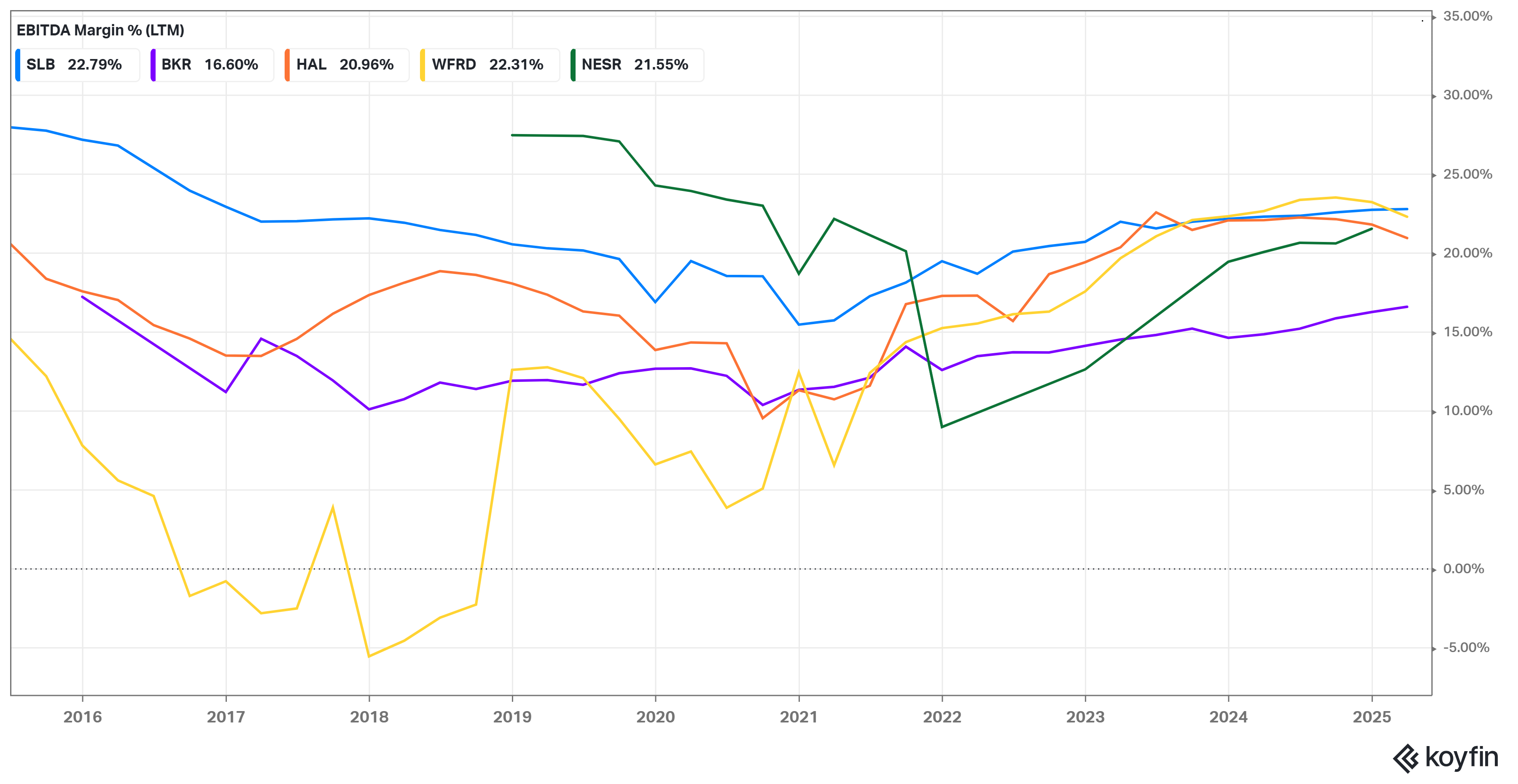
Profitability as measured by EBITDA has been on an upward trend for the industry since the 2020 trough. All the major companies have expanded their EBITDA margins as activity recovered and cost efficiencies took hold. Schlumberger and Weatherford currently lead in EBITDA margin. Schlumberger achieved an adjusted EBITDA margin of ~24–25% in 2023–2024, reflecting its high-margin international business and technology advantages. Weatherford, after restructuring, has seen dramatic margin expansion – its full-year 2023 adjusted EBITDA margin reached 23.1% (up ~4.23 percentage points YoY) and further improved to mid-20s% in 2024, giving it “top-tier” margins now. Halliburton’s margins have also improved to around 20–22% recently, roughly on par with the industry average, after lagging in the mid-2010s. Baker Hughes has the lowest EBITDA margins among the big players – in 2024 its EBITDA margin was about 16.5%, up from prior years but still below peers. This is partly due to Baker’s mix (it has more lower-margin equipment manufacturing and LNG project revenue). NESR, the smaller player, had historically high EBITDA margins (25–30% range pre-2020) but saw compression during the downturn; it improved back to ~19% in 2023. Overall, the ranking on EBITDA margin presently is roughly: Weatherford ≈ Schlumberger > Halliburton ≈ NESR > Baker Hughes.
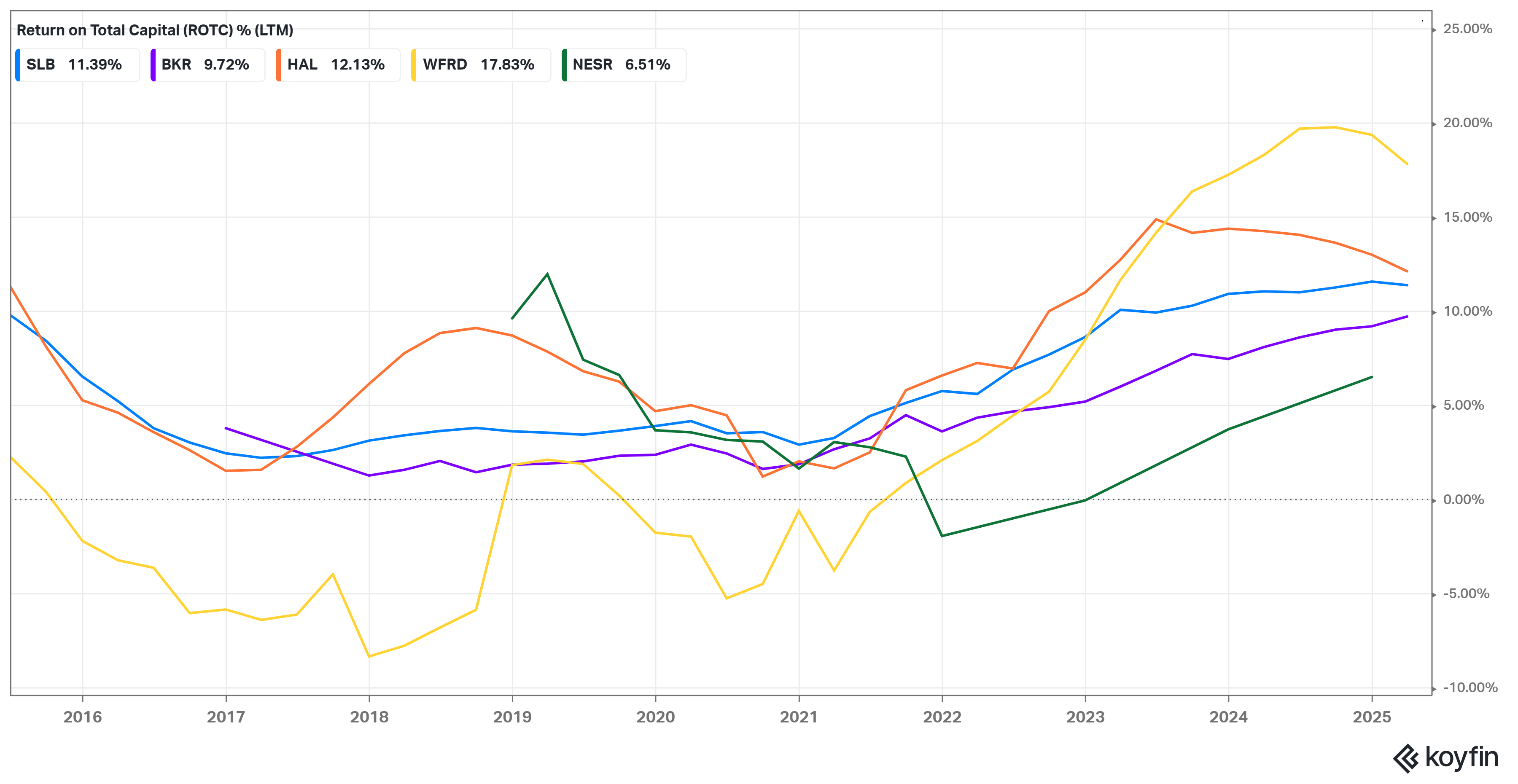
Return on Total Capital (a proxy for how efficiently a company generates profit from its capital base) varies widely, especially given some firms had periods of losses. Weatherford now stands out with industry-best returns on capital after its turnaround. In 2024 Weatherford achieved an ROIC of ~24–26%, which is exceptionally high for this sector. This was enabled by its lighter post-bankruptcy balance sheet (lower capital employed) combined with restored profitability – effectively a leaner company now yielding strong returns. Schlumberger and Halliburton post solid ROIC in the mid-teens. Schlumberger’s ROIC has improved to roughly 13–15% recently, as higher earnings and disciplined capex have lifted returns above its historical averages. Halliburton, similarly, has ROIC on the order of 15–17% in the latest TTM period, comfortably above its cost of capital. Baker Hughes lags on ROIC, currently around 10–11%, reflecting its still-recovering earnings (net income margins around 10%) and a sizeable capital base from its equipment businesses. Baker’s ROIC has improved drastically from negative levels a few years ago, but remains the lowest of the big four. NESR’s ROIC is also on the lower side, in single-digits, because despite decent EBITDA, its net income was very low in 2023 (only ~$12M), dragging return metrics down. In essence, Weatherford currently exemplifies highest capital efficiency, with SLB and HAL in respectable range, and BKR and NESR still working to improve theirs.
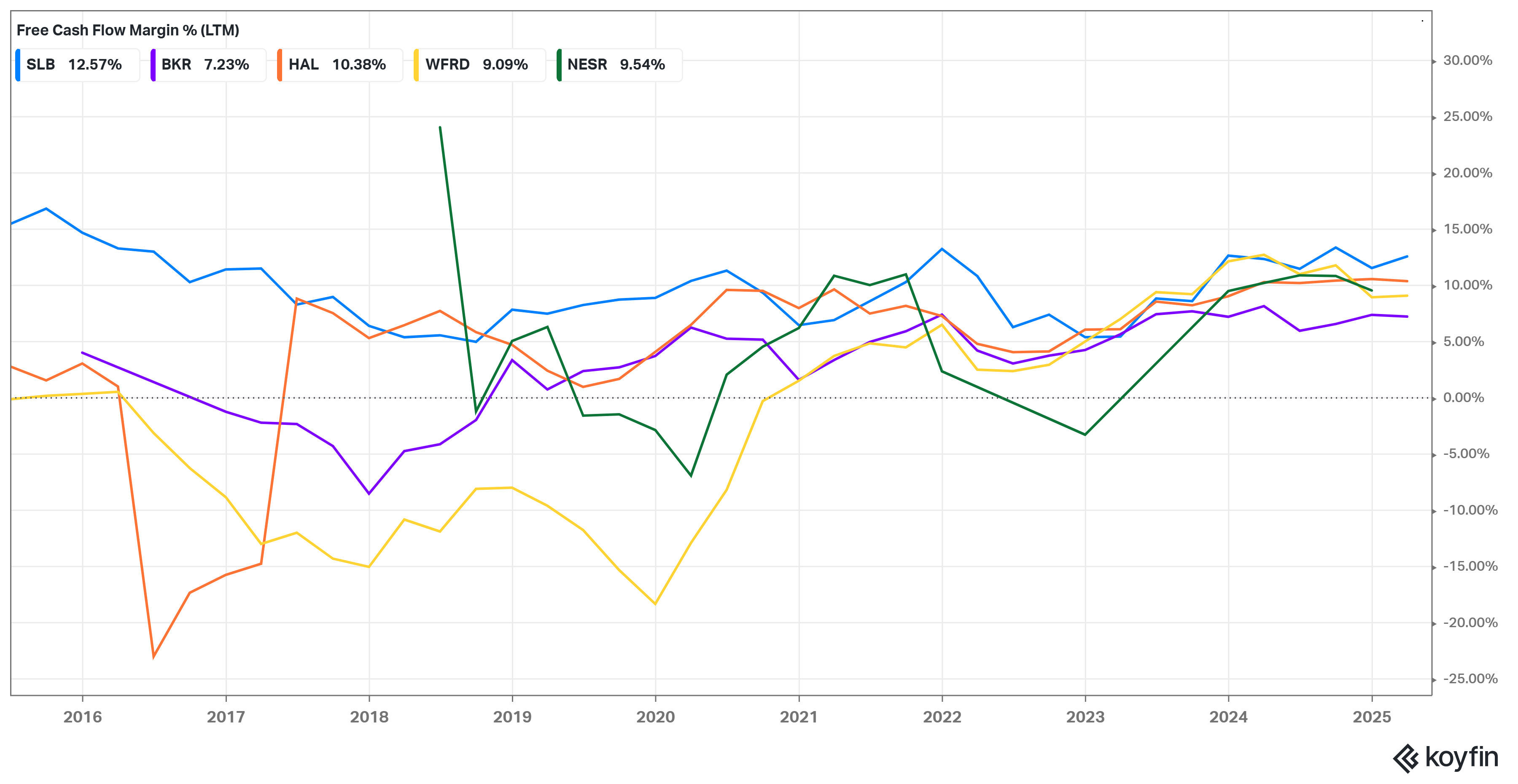
Generating free cash (operating cash flow minus capex) is crucial in this industry to fund R&D and shareholder returns through cycles. The good news is all the major players have moved into a phase of strong free cash flow generation post-2020, thanks to improved margins and more disciplined capital spending. Halliburton and Schlumberger have been notable for robust free cash flow. Halliburton, for example, has been highlighted for its “high free cash flow yield” in recent analyses – it consistently converts a large portion of its earnings to free cash. Schlumberger delivered ~$4.0B of free cash flow in 2024 (about 12% of revenue), a very healthy level, and hit record quarterly FCF in late 2024. Weatherford’s FCF margin is solid (~9–10%) but was slightly down year-over-year as it reinvests in growth; its trailing 12-month FCF margin was ~8.9% for 2024. Still, this is a dramatic turnaround from pre-2019 when Weatherford was cash-flow negative. Baker Hughes has improved its free cash generation substantially – in 2024 it reported ~$2.26B free cash flow, roughly 9–10% of revenue, which is on par with peers (and a big improvement over weaker cash flow years earlier in the decade). Baker’s focus on better working capital management is paying off. NESR’s free cash flow is more limited; it has positive operating cash flow but also significant capital needs for growth, and its small profit means FCF margin is likely only a few percent of revenue.
Comparative Performance Highlights: Taking these metrics together, Schlumberger emerges as the overall financially strongest – with top-tier margins, solid returns, and excellent cash generation. Weatherford is the most improved, now matching or exceeding peers on margin and ROIC, though its smaller scale and flat growth forecast temper the picture. Halliburton is solidly profitable and a cash cow, but slightly behind the very best on margins/ROIC (mid-pack on most metrics). Baker Hughes, while profitable, is a step behind on profitability ratios, reflecting its ongoing turnaround in certain segments – however, it’s closing the gap in FCF. NESR, as the smallest, has the weakest financial metrics (especially net margins/ROIC), indicating higher risk, although its EBITDA margin is comparable to mid-tier peers.
💡 Investment Conclusions
Schlumberger (SLB) stands out as the global leader with broad exposure to the upswing in international oil & gas development. It combines best-in-class technology, expanding margins, and a strong growth outlook (forecast ~8% revenue CAGR vs ~4–5% industry). SLB’s robust fundamentals and diversified earnings base make it a relatively lower-risk play on increased upstream spending. The company is also capitalizing on new growth drivers (digital solutions, energy transition services), which add optionality. Its financial profile – high ROIC ~15% and ample free cash flow – supports continued shareholder returns. Given its scale advantages and execution track record, Schlumberger is poised to benefit the most from a multi-year upcycle. We recommend it as a core holding in the industry.
Baker Hughes (BKR) – offers a compelling mix of traditional oilfield service exposure and growth avenues in LNG and new energy technology. Despite a somewhat lower margin profile today, Baker is firing on all cylinders across its businesses – several upside factors are in play, including rising LNG and hydrogen-related demand and the company’s low leverage. Its order book in LNG equipment, gas turbines, and international projects provides revenue visibility. Baker’s transformation into an “energy technology company” means it could also benefit from decarbonization trends (e.g. supplying carbon capture equipment). Financially, Baker Hughes is improving: EBITDA margins are trending up and free cash flow is strong. Investors looking for a blend of oilfield recovery plus energy transition exposure may find Baker Hughes attractive.
Weatherford (WFRD) – is arguably the “turnaround story” of the group. It has gone from near-extinction to delivering some of the highest margins and ROIC in the industry. The company’s diverse service portfolio and reformed balance sheet mean it could now compete effectively and even take market share in certain segments. An investment in WFRD carries higher volatility (smaller size, past volatility in earnings), but the upside could be significant if management continues to execute. Its growth outlook is modest (flat revenues forecasted), which is a risk, but if it can even modestly grow while maintaining ~20%+ EBITDA margins, the cash flow will be strong. Weatherford also remains a potential strategic target (though there is no concrete evidence, one could envision a scenario where a larger player might consider acquiring it for its technology and regional footholds, now that it’s healthier). Given its excellent recent performance metrics and still-evolving story, WFRD is a buy for investors with higher risk tolerance, focusing on the medium-term potential for continued margin outperformance and perhaps better-than-expected growth if international markets stay hot.
Halliburton (HAL) – is a solid franchise with significant North American exposure and a growing international business. However, at present its near-term catalysts are limited. The company’s heavy weighting to U.S. shale means it faces headwinds from the plateau in North American drilling; indeed, its forecast growth (~2% annually) underperforms peers. On the positive side, Halliburton generates strong free cash flow and has a shareholder-friendly capital return program (dividends, buybacks). It’s also making technology strides (e.g. in drilling software and tools). We believe Halliburton will continue to be a “steady Eddie” – executing reliably but not leading in growth or margin.
NESR (NASDAQ: NESR) – provides unique exposure to Middle Eastern oilfield activity, but as a small-cap with concentrated operations, it carries considerable risk. The company has shown it can grow revenues at double-digit rates and it is leveraging relationships in the MENA region. However, its profitability has been underwhelming – net margins are razor-thin (2023 net income was only $12.6M) and any execution misstep or regional slowdown could hurt its financials. On the upside, if Middle East drilling and service demand remain robust (driven by projects in Saudi, UAE, Qatar, etc.), NESR could continue to expand and possibly improve its margins through scale. Given the uncertainties, we would not consider NESR a top pick at this time compared to its larger peers. It’s more of a speculative hold – existing investors might hold for the growth potential, but new investors should approach cautiously. Until we see sustained earnings improvement (or a clearer competitive edge), the risk/reward is not as favorable as with the bigger names.